
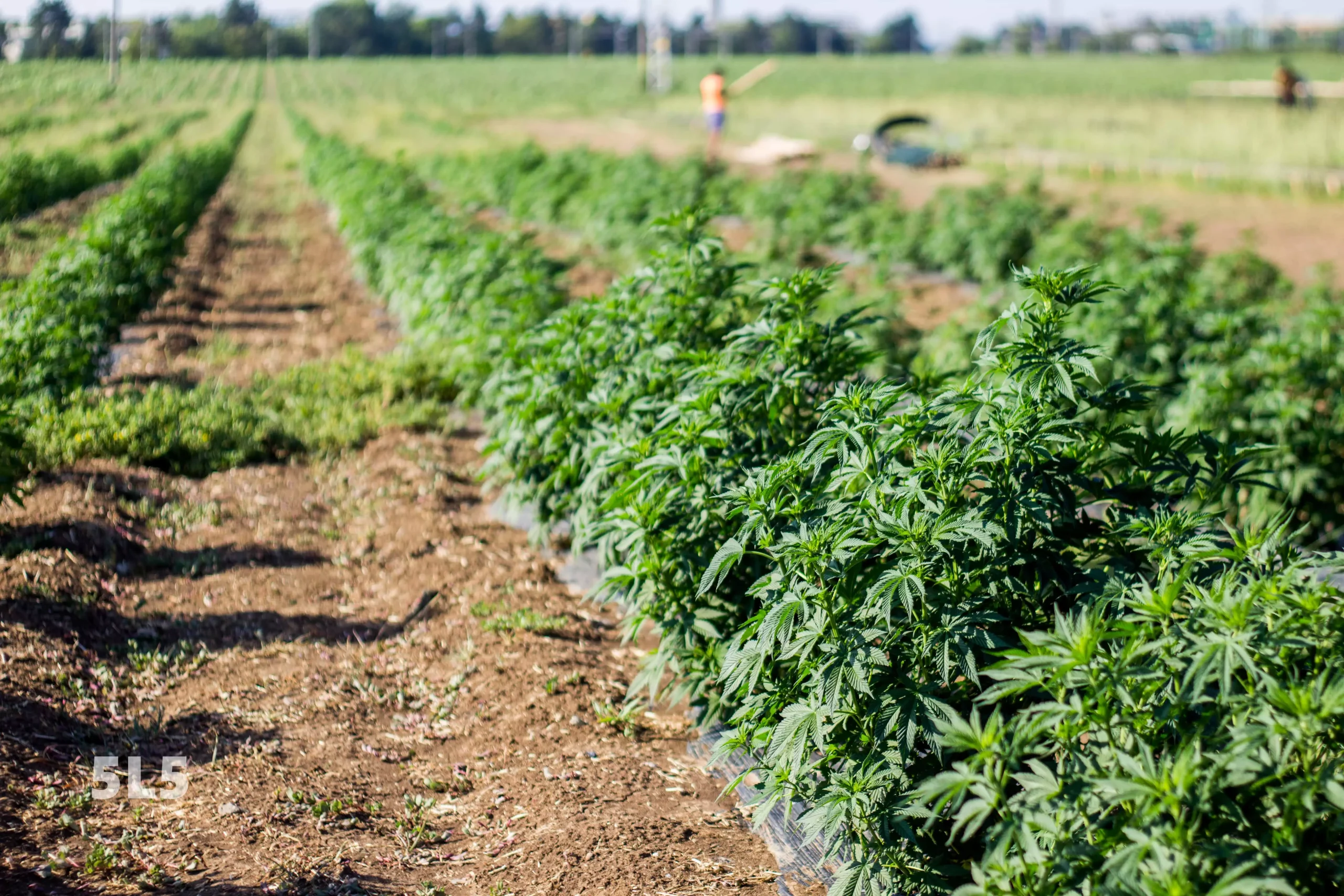
Yes, CBD is legal in Ireland. Cannabidiol itself is not a controlled drug under the Misuse of Drugs Acts, so buying, owning and taking a CBD product is not an offence. The legal questions sit with the product, not the person: whether it contains any THC, and whether it has been made and sold within EU food, cosmetic and medicine rules. Those two points are where a lot of the advice online, including some older guides, gets Ireland wrong.
This guide sets out what Irish and EU law actually says in 2026, including the court rulings that settled the “under 0.2% THC” question, what the Food Safety Authority of Ireland (FSAI) expects of CBD foods, how medical cannabis is different, and how to choose a product you can be confident about. We make our own CBD at our laboratory in York Science Park from hemp grown on our own EU farm, and we ship to Ireland with DPD, so we have added the practical detail from our side too.
Table of Contents
- Is CBD legal in Ireland? The short answer
- CBD and THC: what the Misuse of Drugs Acts control
- The “under 0.2% THC” rule: where it applies and where it does not
- CBD as a food supplement: the novel food rules
- CBD creams, balms and medicines
- Medical cannabis in Ireland is a separate system
- What this means when you buy CBD in Ireland
- Driving, work and travel
- How we do it at HempWell
- Frequently asked questions
Is CBD legal in Ireland? The short answer
CBD (cannabidiol) is one of more than a hundred compounds found in the hemp plant. It is not intoxicating, and for that reason it was never scheduled as a controlled drug in Ireland. Answering a Dáil question in November 2017, the then Minister for Health, Simon Harris, put it plainly: “since CBD is not psychoactive it is not controlled under the Misuse of Drugs legislation, therefore does not require a licence” (Dáil written answer 290, 14 November 2017). The EU’s highest court reached the same view in 2020, ruling that CBD is not a narcotic drug and that a member state cannot ban CBD lawfully produced in another member state (Court of Justice of the EU, Case C-663/18, 19 November 2020).
So the compound is legal and you do not need a prescription or a licence to buy it. What the law does regulate is the product around the CBD: the THC it contains, and the food, cosmetic or medicine rules it is sold under. The rest of this guide covers those.
CBD and THC: what the Misuse of Drugs Acts control
THC (tetrahydrocannabinol) is the compound in cannabis that causes a high, and it is a controlled drug in Ireland under the Misuse of Drugs Act 1977 and its regulations. The Act controls “cannabis”, which it defines as any part of the plant except the mature stalk, the fibre from the stalk and the seeds once separated from the plant. That is why hemp seed oil, hemp seed flour and hemp protein have always been freely sold: they come from the seed, which contains no cannabinoids.
The part that surprises people is how strict Ireland is on THC in finished products. The FSAI’s guidance is direct: “Food products (other than hemp seeds or hemp seed derived products) containing THC at any level are classified as controlled drugs” (FSAI, Regulation of CBD and hemp food products in Ireland). There is no “trace amount” allowance written into Irish law. A CBD oil with no detectable THC is a food supplement; the same oil with a measurable amount of THC is, in law, a controlled drug.
For you as a buyer, the practical consequence is simple. The products that sit comfortably inside Irish law are the ones made from CBD isolate or from broad-spectrum extract that has had the THC removed, backed by a lab report showing THC was not detected. “Full-spectrum” products that advertise a small THC content are the ones to avoid in Ireland, however legal they may be in the country they were made.
The “under 0.2% THC” rule: where it applies and where it does not
Almost every guide to CBD in Ireland, including older versions of this one, says CBD is legal “as long as it contains less than 0.2% THC”. That figure is real, but it belongs to farming, not to finished products. Hemp can be grown in Ireland under a licence issued by the Health Products Regulatory Authority (HPRA) on behalf of the Department of Health, using varieties from the EU’s common catalogue whose THC content does not exceed 0.2% in the plant (Teagasc, Industrial hemp production). Under the EU’s Common Agricultural Policy the on-field limit rose to 0.3% from 2023, but Ireland’s licensing still works to 0.2%. Either way, the percentage describes the crop in the field.
The Irish courts have now said this in terms. In Lynch v Minister for Health, a Cavan hemp shop owner argued that products under 0.2% THC were ordinary goods protected by EU free-movement rules. The High Court dismissed the case in 2024, holding that the 0.2% figure “had been applicable solely to the plant variety from which the cannabis has been extracted: it is not a threshold for the finished product”, and that a preparation “which contains even a low level of THC comes within the concept of a narcotic drug” (Lynch v Minister for Health [2024] IEHC 463). The Court of Appeal dismissed the appeal on 3 November 2025 ([2025] IECA 216).
That is the current law. If you remember one thing from this guide, make it this: in Ireland the question is not “how much THC”, it is “any THC at all”.
| Where you see “0.2%” (or “0.3%”) | What it actually governs |
|---|---|
| Hemp cultivation licences (HPRA / Department of Health) | The THC content of the licensed plant variety in the field |
| EU Common Agricultural Policy (0.3% from 2023) | Which hemp varieties qualify for farm payments |
| The CJEU’s Kanavape ruling (2020) | The plants the French CBD was extracted from, not the finished vape liquid |
| Finished CBD oils, capsules, gummies, teas sold in Ireland | No threshold applies. Any THC makes the product a controlled drug (FSAI; Lynch 2024/2025) |
CBD as a food supplement: the novel food rules
CBD oils, capsules, gummies and teas are foods in law, and food law across the EU treats CBD as a “novel food”: an ingredient without a significant history of consumption before 1997, which needs a safety authorisation before it can be sold. The FSAI states that “CBD is an unauthorised novel food” and that, under the Novel Food Regulation, it “cannot legally be placed on the EU market as or in food or food supplements” until an application is approved (FSAI guidance). The European Food Safety Authority paused its assessments in June 2022 because applicants had not yet supplied enough data on effects on the liver, gut, hormones and nervous system, so at EU level the authorisations are still working through (EFSA statement on the safety of cannabidiol as a novel food, 2022).
Two things are worth understanding about this. First, novel food is a duty on businesses, not consumers; it is sellers the FSAI acts against, and it has done so, for example withdrawing one Irish brand’s CBD oils in March 2024 as unauthorised novel foods (FSAI food alert 2024.07). Second, the companies taking the rules seriously are the ones who have put their products through a regulator’s process rather than ignoring it. In the UK, the Food Standards Agency runs a public list of CBD products whose novel food applications are progressing, and HempWell’s edible range has been on it since 2022. That is the standard of evidence we hold our Irish range to as well.

CBD creams, balms and medicines
CBD applied to the skin is a cosmetic, not a food, so the novel food rules do not apply. Creams, balms and massage oils instead fall under the EU Cosmetics Regulation, which requires a cosmetic product safety report (CPSR) and a notification before sale. The HPRA is the competent authority for cosmetics in Ireland. Our CBD creams and balms each carry a CPSR, and the same “no THC” principle applies to the extract that goes into them.
At the other end of the scale, a CBD product that claims to treat or cure a condition is a medicine in law, and no CBD oil sold over the counter in Ireland is authorised as one. The 2017 Dáil answer quoted above made the same point: “CBD oil is not authorised as a medicinal product, however, it is sometimes marketed as a nutritional or dietary supplement”. That is why a responsible CBD seller will not tell you their oil treats anxiety, pain or insomnia. If you see those claims, treat them as a warning sign about the seller rather than a promise about the product.
Medical cannabis in Ireland is a separate system
Ireland’s Medical Cannabis Access Programme is sometimes confused with CBD, but it is a different thing. It allows hospital consultants to prescribe approved cannabis-based products, which contain THC, for three conditions: spasticity associated with multiple sclerosis, intractable nausea and vomiting from chemotherapy, and severe treatment-resistant epilepsy, where standard treatments have failed (Department of Health, Medical Cannabis Access Programme, July 2021). Those products are controlled drugs dispensed through pharmacies on a consultant’s prescription.
Over-the-counter CBD sits entirely outside that programme. It is a food supplement, it contains no THC, and it is not a treatment for anything. If you have one of the conditions above, the route is through your consultant, not a CBD shop.
What this means when you buy CBD in Ireland
Pulling the rules together, a CBD product you can buy with confidence in Ireland looks like this:
- No THC, proven. The label should say THC-free, isolate or broad-spectrum, and there should be an independent lab report (a certificate of analysis) for the batch showing THC “not detected”. Ours are published on our lab reports page.
- Made from licensed EU hemp. Legally grown crop, extracted and bottled by a business that can tell you where. Our hemp is grown on our own farm in the EU and processed at our laboratory in York Science Park; our guide to how CBD is made walks through the process.
- Sold as a food supplement, labelled as one. A CBD content per bottle and per serving, a best-before date, a batch number, and no medical claims.
- A business that engages with regulators. Novel food applications, cosmetic safety reports, a scientific adviser you can name. Ours is Professor Mike Barnes, a consultant neurologist and one of the UK’s leading authorities on medical cannabis.
- Clear guidance on how much to take. The FSAI, like the UK FSA, points to a cautious daily limit for healthy adults, and a good seller will show you how to start low. Our CBD dosage guide covers it.
If you are new to CBD, our explainer on what CBD is is the place to start. For the product itself, our Pure CBD Oil range is CBD isolate in organic MCT oil, the simplest THC-free choice, and our Broad Spectrum range keeps the plant’s other cannabinoids with the THC removed. Capsules and gummies give a fixed amount per piece if you prefer not to measure.
Driving, work and travel
Because the law turns on THC, the everyday questions all come back to the same point. Ireland’s roadside drug testing and workplace drug screening look for THC, not CBD, so a product with no THC in it has nothing to show up; a product with “a little” THC can. We cover the detail in our guides to driving on CBD oil in Ireland and CBD and workplace drug tests in Ireland.
Travelling into Ireland with CBD bought elsewhere follows the same rule: a THC-free product is a food supplement, but a product containing THC is a controlled drug at the border regardless of where it was legal to buy. Our guide to bringing CBD into Ireland covers flights and ferries, and we deliver across Ireland with DPD, free on orders over €50, so there is rarely a need to carry it in.
How we do it at HempWell
We have been making CBD since 2018 and selling into Ireland since 2022, and our approach to the law has not changed: make the product in a way that leaves no legal question, then prove it.
- THC-free by design. Our Pure range is CBD isolate and our Broad Spectrum range has the THC removed. Every product is independently lab tested and the certificates are on our lab reports page, batch by batch.
- Our own supply chain. Hemp from our own EU farm, extracted and bottled at our laboratory in York Science Park, which means we can answer “where did this come from” for every bottle.
- Regulatory work done in the open. Our edible range entered the UK Food Standards Agency’s novel food process in 2021 and has appeared on its public list since 2022; our cosmetics carry CPSRs; and we follow the FSAI’s published guidance for the Irish market.
- Honest claims. We sell CBD as a food supplement, we do not promise it will treat anything, and our health content is written with Professor Mike Barnes, a consultant neurologist, as our scientific adviser.
If you want to browse, our Irish shop has the full range with prices in euro, and a subscription takes 20% off if you take CBD daily. Questions about the law or a product? Get in touch; we would rather you ask than guess.
Frequently asked questions
Is CBD oil legal in Ireland in 2026?
Yes. CBD is not a controlled drug, so buying and using CBD oil is legal. The product must contain no THC: the FSAI classifies foods containing THC at any level as controlled drugs, and the Irish courts confirmed in 2024 and 2025 that there is no 0.2% allowance for finished products.
Can I buy CBD in Ireland without a prescription?
Yes. CBD is sold as a food supplement and needs no prescription or licence. Prescriptions only come into it for medical cannabis products containing THC, which are limited to three conditions under the Medical Cannabis Access Programme.
What does “less than 0.2% THC” mean on a CBD label?
Usually that the hemp the product was extracted from met the EU cultivation limit. It is not a legal allowance for THC in the finished product in Ireland. Look instead for a lab report showing THC was not detected.
Is it legal to order CBD online from the UK or another EU country?
Yes, provided the product contains no THC. The same Irish rule applies to imported products, and the courts have confirmed the State may stop CBD products containing trace THC at the border. HempWell ships to Ireland with DPD from stock that is THC-free and lab tested.
Will CBD show up on a drug test in Ireland?
Roadside and workplace tests look for THC. A THC-free CBD product has nothing to detect; a full-spectrum product with trace THC can. See our guides on driving and workplace testing linked above.
Is hemp oil the same as CBD oil, and is it legal?
No. Hemp seed oil is pressed from the seeds, contains no cannabinoids and has always been legal as a food. CBD oil is an extract from the flowers and leaves, dissolved in a carrier oil. Both are legal in Ireland when THC-free, but only CBD oil contains CBD.