
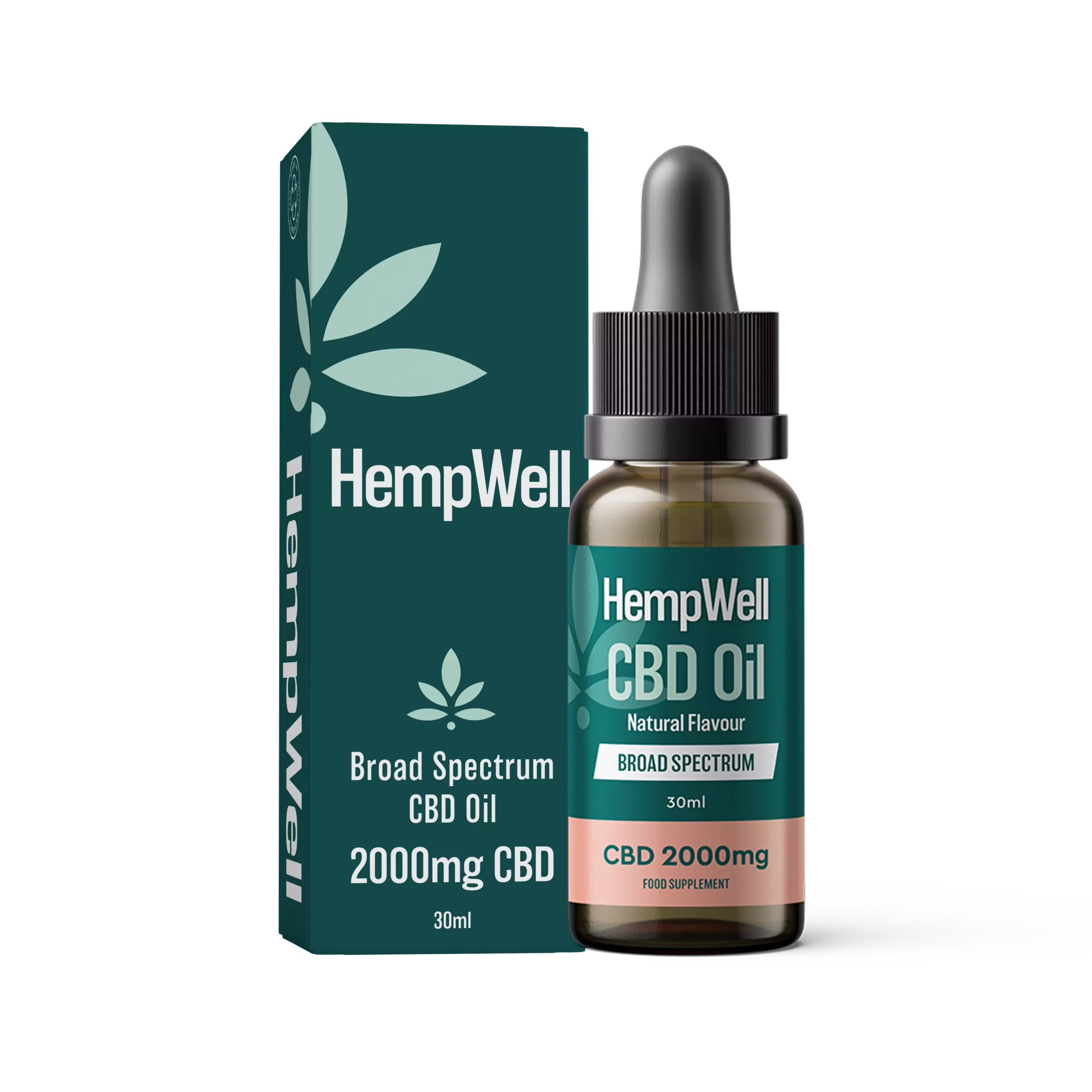
“Hemp oil” in Ireland means two different products that happen to come from the same plant. Hemp seed oil is a cooking and skincare oil pressed from the seeds; it contains no CBD and has always been an ordinary food. CBD oil is an extract from the flowers and leaves, dissolved in a carrier oil and sold as a food supplement; it is the one people take for the reasons CBD is known for. The benefits people attach to “hemp oil” belong to one or the other, never both, so the first job of this guide is to keep them apart.
Below we cover what each oil actually contains and what the research supports, what Irish law says about them (which is where the two differ most), how CBD oil is absorbed and why the carrier oil matters, how to read a label and choose a strength, and how our own oils are made. We press nothing in Ireland ourselves, but we make every CBD oil we sell at our laboratory in York Science Park from hemp grown on our own EU farm, and ship it to Ireland with DPD, so the practical detail here comes from our side of the bottle.
Table of Contents
- Two oils from one plant: hemp seed oil and CBD oil
- Hemp seed oil: what it is good for
- CBD oil: what it is, and what the evidence does and does not say
- What Irish law says about each oil
- How CBD oil is absorbed, and why the carrier oil matters
- Choosing a CBD oil in Ireland: label, strength, spectrum
- How we make ours at HempWell
- Frequently asked questions
Two oils from one plant: hemp seed oil and CBD oil
Hemp and cannabis are the same species, Cannabis sativa. Industrial hemp is the variety grown under licence for fibre, seed and, in some countries, cannabinoid extraction. From that one plant come two oils that share a name and almost nothing else.
| Hemp seed oil | CBD oil | |
|---|---|---|
| Made from | The seeds, cold-pressed | Extract of the flowers and leaves, blended into a carrier oil |
| Contains | Fats (mostly polyunsaturated), vitamin E; no cannabinoids | CBD and, in broad-spectrum oils, the plant’s other non-intoxicating cannabinoids; no THC in a legal Irish product |
| Used as | Food (dressings, smoothies) and a skin oil | A food supplement measured with a graduated pipette and held under the tongue |
| Typical label | Volume in ml, nutrition panel | CBD in mg per bottle and per ml, batch number, lab report |
| Price point | Supermarket cooking-oil prices | €20 to €120 a bottle depending on strength |
| Status in Ireland | Ordinary food; outside the Misuse of Drugs Acts and the novel food rules | Food supplement; must contain no THC; subject to EU novel food rules |
If a bottle says “hemp oil” and costs a few euro, it is hemp seed oil. If it says “hemp oil” with a milligram figure on the front and a price to match, it is a CBD oil using the older name. The milligrams are the giveaway.
Hemp seed oil: what it is good for
Hemp seed oil’s case is nutritional. Reviews of the seed’s composition put the oil at around 80% polyunsaturated fat, dominated by linoleic acid (omega-6) and alpha-linolenic acid (omega-3) in a ratio close to 3:1, with a small amount of gamma-linolenic acid, which is unusual in a food oil (Farinon et al., 2020). It is a pleasant, nutty oil to use cold: in dressings, drizzled over vegetables or stirred into a smoothie. It is not for frying, because those polyunsaturated fats break down with heat.
Two small Finnish trials are the human evidence most often cited. In a four-week crossover study, 30ml a day of hemp seed oil raised linoleic and gamma-linolenic acid in the blood and produced a lower total-to-HDL cholesterol ratio than flaxseed oil, though with “only minor effects on concentrations of fasting serum total or lipoprotein lipids” (Schwab et al., 2006). In people with atopic dermatitis, 20 weeks of dietary hemp seed oil improved reported skin dryness and itchiness and reduced the use of skin medication compared with olive oil, which the authors attributed to “the balanced and abundant supply of PUFAs” (Callaway et al., 2005). Both are small and old, so read them as “a good source of essential fats”, not as a treatment for anything.
On the skin, hemp seed oil behaves like other plant oils: it helps a dry, tight-feeling surface hold moisture. That is a cosmetic effect. It is also why hemp seed oil turns up as an ingredient in some CBD skincare, including as a carrier in our own Broad Spectrum oils, where it does a second job carrying the extract.
CBD oil: what it is, and what the evidence does and does not say
CBD oil is a measured amount of cannabidiol, extracted from hemp flowers and leaves, dissolved in a carrier oil so you can measure it precisely with a pipette. A “500mg” bottle holds 500mg of CBD in 30ml; a “4000mg” bottle holds eight times as much in the same volume. Isolate oils contain CBD alone; broad-spectrum oils keep the plant’s other non-intoxicating cannabinoids with the THC removed. Our explainer on what CBD is covers the compound itself, and our comparison of isolate and broad-spectrum CBD oil covers the choice between them.
What CBD oil does is the question behind most searches for “hemp oil benefits”, and the honest answer is in two parts. As a prescription medicine at high doses, CBD is an established treatment for rare childhood epilepsies. As a food supplement at the amounts sold in Ireland, it is not a treatment for anything, and we do not sell it as one. What the controlled studies at those amounts do show is that CBD is not intoxicating, is well tolerated, and produces no measurable impairment: in a Johns Hopkins trial, “subjective effects of oral CBD did not differ from placebo” and “cognitive/psychomotor impairment was not observed” (Spindle et al., 2020). People use it as part of an evening or morning routine and judge it over weeks. Our guides on whether CBD gets you high and CBD oil side effects go through the research in detail.
What Irish law says about each oil
This is where the two oils part company completely, and where most online guides get Ireland wrong.
Hemp seed oil is outside the Misuse of Drugs Acts, because the Acts exclude the seed once separated from the plant, and outside the EU novel food rules, because hemp seed foods have a long history of use. The Food Safety Authority of Ireland states that “hemp seeds and hemp seed derived products such as hemp seed oil and hemp seed flour do not fall within the scope of the EU Novel Food Regulation” (FSAI, Regulation of CBD and hemp food products). You can buy it anywhere food is sold.
CBD oil is legal to buy and use in Ireland, because CBD itself is not a controlled drug, but the product must contain no THC at all. The FSAI’s guidance is that “food products (other than hemp seeds or hemp seed derived products) containing THC at any level are classified as controlled drugs”, and the High Court and Court of Appeal confirmed in 2024 and 2025 that the 0.2% figure you see on labels is a hemp cultivation limit, not an allowance for finished products. CBD foods are also novel foods under EU law, which is a duty on sellers rather than buyers. Our guide to whether CBD is legal in Ireland sets out the rulings and what they mean when you buy.
The practical consequence: a CBD oil for the Irish market should be isolate or THC-removed broad spectrum, with a lab report showing THC was not detected. “Full-spectrum” oils that advertise a trace of THC are legal in some countries and not here.
How CBD oil is absorbed, and why the carrier oil matters
CBD dissolves in fat, not water, which shapes everything about how it is taken. Held under the tongue for a minute, some of it passes directly through the lining of the mouth; the rest is swallowed and absorbed with the carrier oil through the gut. Taking it with or after a meal makes a large difference: in a controlled trial, “a high-fat meal increased CBD plasma exposure (Cmax and AUCt) by 4.85- and 4.2-fold” (Taylor et al., 2018), and a systematic review confirms that peak levels are “increased during fed states and in lipid formulations” (Millar et al., 2018). Our guide to taking CBD oil covers the technique.
The carrier oil also decides how well the bottle keeps. A study of shop-bought cannabis oils found that products made with sunflower or olive oil formed free radicals as they aged, with “the most significant decrease in CBD” in sunflower-oil products, while “cannabis oils using medium-chain triglycerides (MCT) showed little or no free radical formation” (Tonoyan et al., 2022). That is why our Pure CBD Oil range uses organic MCT coconut oil, and why a broad-spectrum oil in hemp seed oil rewards being kept cool, dark and finished within its best-before date. Our guide to CBD bioavailability goes into the numbers.
Choosing a CBD oil in Ireland: label, strength, spectrum
- Check it is CBD oil, not hemp seed oil. A milligram figure on the front and a lab report behind it. If there is no mg figure, you are holding a food oil.
- THC not detected on the lab report. The Irish line is zero. Ours are on our lab reports page, batch by batch.
- Pick a spectrum. Isolate for the simplest, flavour-neutral option; broad spectrum if you want the plant’s other cannabinoids with the THC removed.
- Pick a strength by the milligrams per ml, not the bottle. Our pipettes are graduated, so you measure CBD in millilitres rather than counting drops, which vary in size and are hard to judge. A 500mg oil gives about 17mg per ml, or 4mg in a quarter pipette; a 2000mg oil about 67mg per ml, or 17mg in a quarter. New to CBD, start on 500mg or 1000mg and build up; our CBD dosage guide explains how, within the Food Safety Authority of Ireland’s guidance of under 70mg a day for healthy adults. Our guide to choosing a strength goes deeper.
- Look at the carrier. MCT for shelf life and a neutral taste; hemp seed oil for a fuller flavour.
- Buy from a seller that engages with the regulators. Novel food applications, cosmetic safety reports, a scientific adviser you can name.
| HempWell oil (30ml) | CBD per bottle | CBD per ml (per quarter pipette) | Price in Ireland |
|---|---|---|---|
| Pure CBD Oil 500mg | 500mg | 17mg (4mg) | €19.99 |
| Pure CBD Oil 1000mg | 1000mg | 33mg (8mg) | €39.99 |
| Broad Spectrum CBD Oil 1000mg | 1000mg | 33mg (8mg) | €49.99 |
| Pure CBD Oil 2000mg | 2000mg | 67mg (17mg) | €69.99 |
| SleepWell CBD Oil 2000mg | 2000mg + lavender and valerian | 67mg (17mg) | €69.99 |
| Broad Spectrum CBD Oil 4000mg | 4000mg | 133mg (33mg) | €119.99 |
The full range, from 500mg to 4000mg in both spectrums, is in our CBD oil collection, with the strongest oils gathered under high strength CBD oil. Delivery across Ireland is with DPD and free on orders over €50.
How we make ours at HempWell
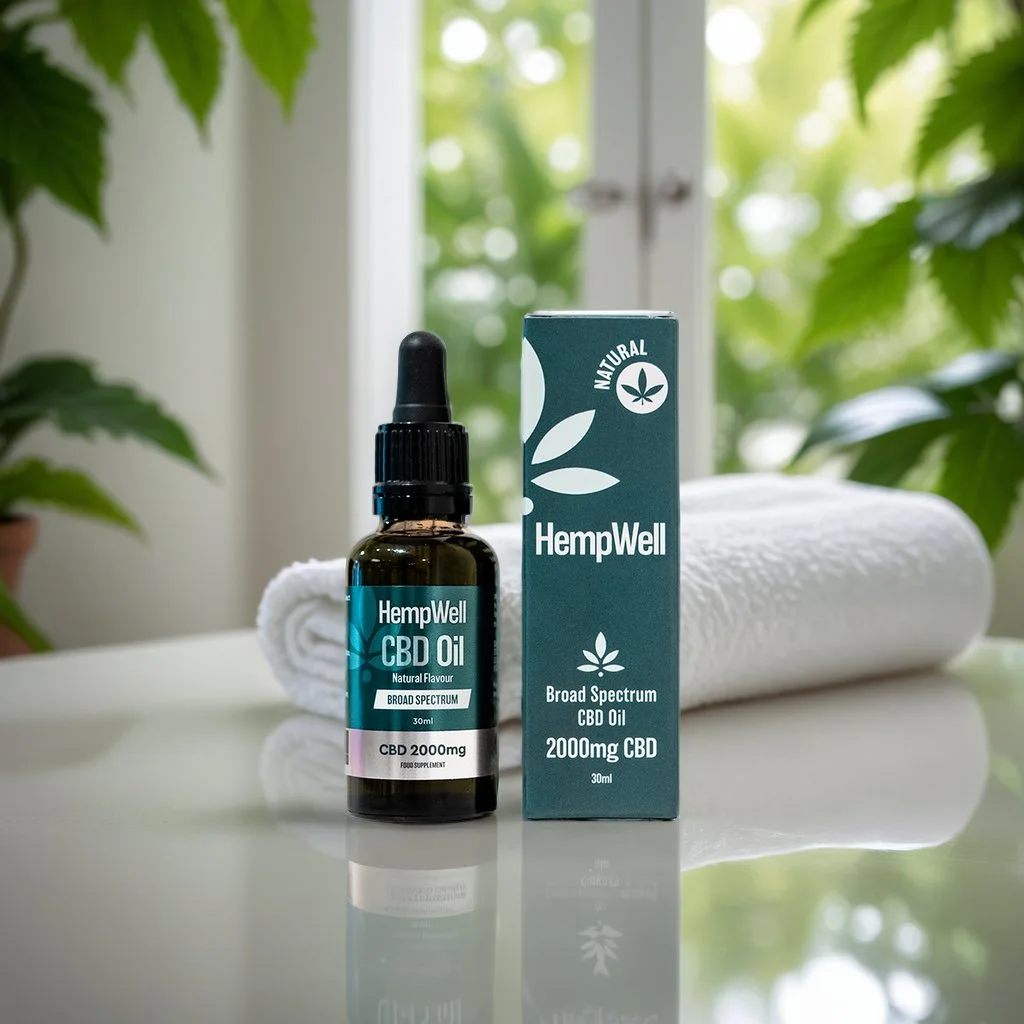
- Seed to shelf. Hemp grown on our own EU farm, extracted and bottled at our laboratory in York Science Park. We can answer “where did this come from” for every bottle.
- THC-free by design. Pure range: CBD isolate in organic MCT coconut oil. Broad Spectrum range: THC removed, other cannabinoids kept, in hemp seed oil. Each product is independently lab tested and the certificate is on our lab reports page.
- Clear strengths, clear starting point. Six strengths per range, a graduated pipette in the box, and a dosage guide that starts you low.
- Honest about what it is. A food supplement, not a medicine. Our health content is written with Professor Mike Barnes, a consultant neurologist, as our scientific adviser.
Frequently asked questions
Is hemp oil the same as CBD oil?
No. Hemp seed oil is pressed from the seeds and contains no CBD; CBD oil is an extract from the flowers and leaves with a measured amount of CBD. Some older products call CBD oil “hemp oil”, so look for a milligram figure to tell them apart.
What are the benefits of hemp oil?
Hemp seed oil is a good source of polyunsaturated fats, including omega-3, and is a pleasant cold-use food and skin oil. Small trials show favourable changes in blood fat profiles and in dry, itchy skin, but it is a food, not a treatment.
Is hemp oil legal in Ireland?
Hemp seed oil is an ordinary food and freely sold. CBD oil is legal as a food supplement provided it contains no THC; any THC makes it a controlled drug in Ireland, whatever the label’s percentage says.
What does CBD oil do?
At food-supplement amounts it is not intoxicating and produces no measurable impairment; people take it as a daily routine and judge it over weeks. It is not a treatment for any condition and we do not sell it as one.
Which CBD oil strength should I start with in Ireland?
500mg or 1000mg for a first bottle, a quarter of the graduated pipette once a day for a week, then adjust, staying under the FSAI’s 70mg-a-day guidance for healthy adults. Move up in strength when you are taking more than a full pipette a day of a weaker oil.
Can I cook with CBD oil?
Better not. Heat degrades CBD and oxidises the carrier oil. Take it under the tongue or stir it into something cool. Hemp seed oil is the one for the kitchen, and even then cold rather than fried.