
CBD is not a treatment for sciatica, and no honest seller in Ireland can tell you it is. Sciatica is nerve pain from the lower back that usually settles on its own over a few weeks with movement, heat and ordinary painkillers, and the research on CBD for nerve pain at the amounts sold as a food supplement is thin and mostly negative. What CBD products can offer is narrower: a cooling cream or balm on a tight, aching back and hip as part of keeping comfortable and active, and a food supplement some people like in their evening routine while the nerve recovers. This guide separates the two honestly.
We cover what sciatica is and what the HSE advises, what the clinical trials of cannabinoids for nerve pain actually found, where topicals fit (and where they do not), the safety questions worth asking in Ireland, and how we make our own products. We make our creams, balms and oils at our laboratory in York Science Park, and our scientific adviser is a consultant neurologist, so we would rather under-promise here than add to the noise.
Table of Contents
- What sciatica is, and what the HSE advises
- CBD and nerve pain: what the trials found
- Where a CBD cream or balm fits
- CBD oil and capsules: the honest position
- Safety and legality in Ireland
- What actually helps sciatica
- How we do it at HempWell
- Frequently asked questions
What sciatica is, and what the HSE advises
Sciatica is pain along the sciatic nerve, which runs from the lower back through the buttock and down the leg. The HSE’s patient guidance puts the cause simply: it happens “when the sciatic nerve is irritated or compressed”, most often by a bulging disc in the lower back, and “it usually gets better in 4 to 6 weeks but can last longer” (HSE, Sciatica). The advice while it settles is to “continue your normal activities as much as possible”, “do regular exercises for sciatica”, “hold heat packs to the painful areas” and “ask your pharmacist or GP about painkillers”.
The HSE also lists the signs that need urgent help (call 999 or 112): sciatica on both sides, severe weakness or numbness in the legs, numbness around the genitals, or loss of bowel or bladder control. Those point to a serious spinal problem and are not a job for any cream or supplement. If pain is not improving after a few weeks of self-care, or is stopping you doing normal things, see your GP.
CBD and nerve pain: what the trials found
Sciatica is neuropathic pain, so the relevant research is the cannabinoid trials in chronic nerve pain. Three findings matter.
- The cannabis medicines that have been trialled contain THC, not CBD alone. The Cochrane review of cannabis-based medicines for chronic neuropathic pain pooled 16 trials and 1,750 patients, almost all of a THC-containing spray or synthetic THC. Even those “may increase the number of people achieving 50% or greater pain relief compared with placebo (21% versus 17%)”, a number needed to treat of 20, on low-quality evidence, with more people dropping out because of side effects (Mücke et al., Cochrane, 2018). Those products are prescription medicines containing THC, which is a controlled drug in Ireland; they tell us little about a THC-free supplement.
- CBD on its own, taken by mouth, has not beaten placebo for pain in good trials. In a 12-week randomised trial in hand osteoarthritis and psoriatic arthritis, 20 to 30mg of CBD a day produced “neither clinically nor statistically significant effects of CBD for pain intensity” compared with placebo (Vela et al., Pain, 2022). In an 8-week trial of 600mg a day added to paracetamol for knee osteoarthritis, pain fell by the same amount in both groups, and the CBD group had more side effects and more raised liver enzymes (Pramhas et al., Lancet Regional Health Europe, 2023). Neither was a sciatica trial, but they are the best placebo-controlled evidence on CBD and musculoskeletal pain.
- Topical CBD has one small positive trial. A four-week study of 29 people with peripheral neuropathy found “a statistically significant reduction in intense pain, sharp pain, cold and itchy sensations in the CBD group” with a 250mg CBD oil applied to the skin (Xu et al., 2020). It is small, short, and in a different nerve condition from sciatica, so it is a reason for interest rather than a claim.
Put together: there is no evidence that CBD treats sciatica, some evidence that oral CBD at supplement doses does nothing for musculoskeletal pain, and a hint that topical CBD may help some nerve symptoms. That is what we tell customers, and it is why we sell CBD as a food supplement and cosmetic, not as a treatment.
Where a CBD cream or balm fits
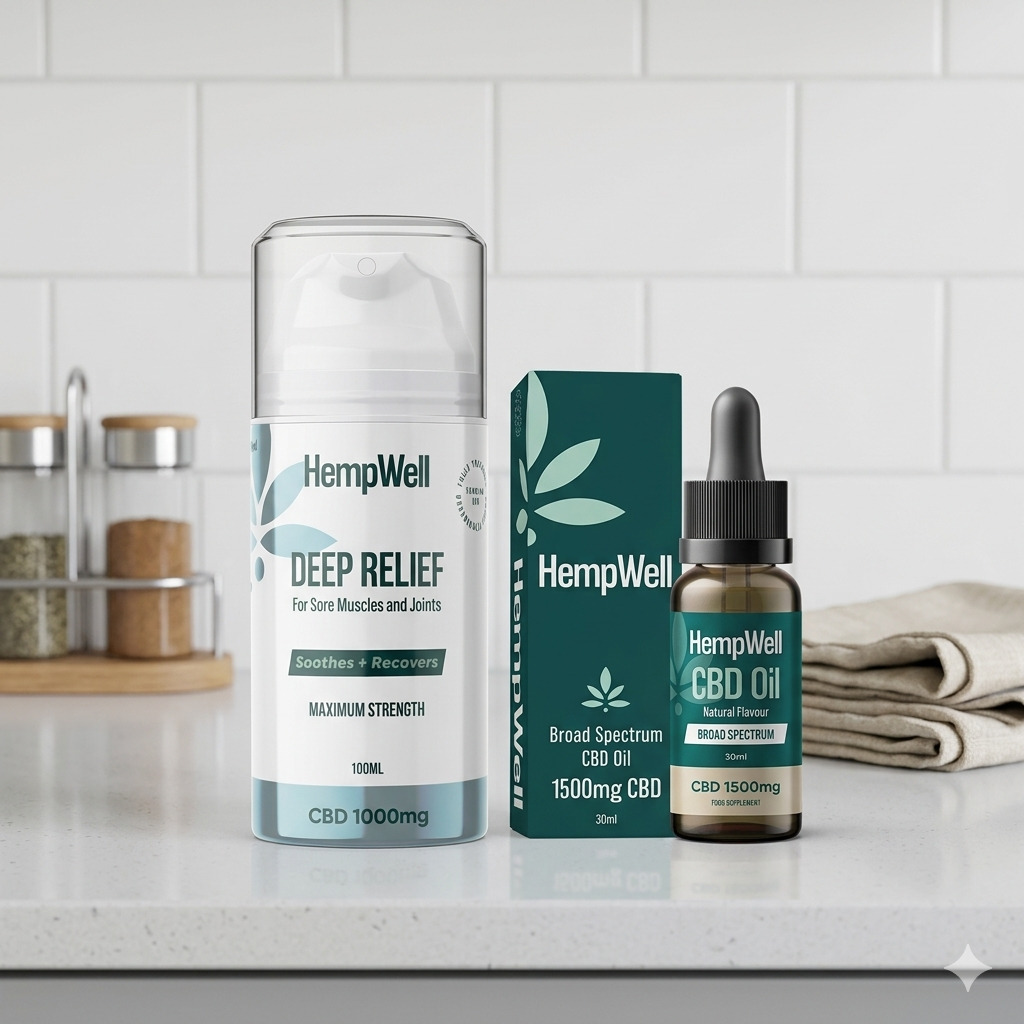
If a CBD product has a place in sciatica, it is on the skin over the sore lower back, buttock and hip, as part of the “keep moving, keep comfortable” advice. A cooling cream with menthol and eucalyptus gives an immediate sensation that distracts from a tight muscle, and the act of rubbing it in is itself a small, useful thing for a stiff back. That is a comfort effect, not a nerve treatment. Our guide to how to use CBD cream covers application, and topical versus transdermal CBD explains why very little CBD from a cream reaches the bloodstream.
| Product | Format | Where it suits sciatica |
|---|---|---|
| Cooling Muscle & Joint Cream 1000mg | 100ml pump, menthol and eucalyptus | Lower back and hip after sitting or exercise; the cooling sensation is the point |
| Cooling Roll-on Gel 500mg | 50ml roll-on, aloe and eucalyptus | Mess-free for the buttock and back of the leg during the day |
| CBD Muscle Balm 500mg | 50ml jar, soya wax and cocoa butter base | Massaged into the lower back before bed |
| CBD patches | 30mg or 50mg, 24-hour wear | For people who prefer not to reapply; placed over the lower back |
Heat is in the HSE’s advice and in the evidence; a cooling cream is not. Use the cream for what it is, a pleasant way to look after a sore back while you keep moving, and keep the heat pack for the deeper ache.
CBD oil and capsules: the honest position
Some people with sciatica take CBD oil or capsules in the evening because the pain disturbs sleep and they want a routine that helps them settle. There is nothing in the trials to say CBD will reduce the nerve pain, and the FSAI’s guidance for healthy adults is to stay under 70mg a day from supplements. If you want to try it, start low, take it with food, and judge it over a couple of weeks against whether you feel more settled, not whether the leg pain has gone; our CBD dosage guide covers how, and our guide to CBD oil side effects covers what to watch for, including drowsiness and interactions with other medicines.
Safety and legality in Ireland
- Painkillers and CBD. CBD is processed by the same liver enzymes as many medicines. Paracetamol and ibuprofen at normal doses are not a known problem, but if you have been prescribed stronger painkillers, muscle relaxants, anticoagulants or anti-epileptics, ask your pharmacist before adding CBD. Our guide to CBD and medication interactions lists the groups to be careful with.
- THC-free is the Irish line. Any THC in a product makes it a controlled drug here, so choose isolate or THC-removed broad spectrum with a lab report. Our guide to whether CBD is legal in Ireland covers the court rulings.
- Driving. Sciatica often means a lot of time in the car. THC-free CBD is not a driving issue; drowsiness when you first start is. See driving on CBD in Ireland.
What actually helps sciatica
- Keep moving. Bed rest makes it worse; gentle walking and the HSE’s sciatica exercises make it better.
- Heat on the lower back, 15 to 20 minutes at a time.
- Ordinary painkillers as advised by your pharmacist, for long enough to stay active.
- Physiotherapy if it is not settling after a few weeks; the HSE also offers musculoskeletal physiotherapy clinics through GP referral.
- The urgent signs above: both legs, weakness, numbness around the genitals, bladder or bowel changes. Do not wait.
How we do it at HempWell
- Topicals made as cosmetics, labelled as cosmetics. Our creams, balms and gels are made at our laboratory in York Science Park with THC-free CBD and real menthol, eucalyptus and aloe, with cosmetic safety reports and lab reports on our lab reports page.
- No treatment claims. We do not say CBD treats sciatica, because the evidence does not. We say what the products are for.
- Medical oversight. Our health content is written with Professor Mike Barnes, a consultant neurologist, as our scientific adviser.
Browse the CBD creams and our page on CBD and pain, delivered across Ireland by DPD and free on orders over €50.
Frequently asked questions
Does CBD help sciatica?
There is no trial showing it does. Oral CBD at supplement doses has not beaten placebo for musculoskeletal pain, and the cannabis medicines with some evidence in nerve pain contain THC. A cooling CBD cream can make a sore back more comfortable while it settles, which is a different claim.
Is CBD cream or CBD oil better for sciatica?
For the sore back and hip, a cream or balm, because the sensation is immediate and local. Oil or capsules are a routine some people like in the evening, with no evidence they change the nerve pain.
Can I take CBD with my sciatica painkillers?
With paracetamol or ibuprofen at normal doses, generally yes. With prescription painkillers, muscle relaxants, anticoagulants or anti-epileptics, ask your pharmacist first.
How long does sciatica last?
The HSE says it usually improves in 4 to 6 weeks but can last longer. See your GP if it is not improving after a few weeks or is stopping normal life, and seek urgent help for the warning signs.
Is CBD for sciatica legal in Ireland?
THC-free CBD products are legal as food supplements and cosmetics. Products with THC are controlled drugs, whatever the label says, and should not be sold here.
What about CBD patches for sciatica?
A patch over the lower back gives steady, low-level delivery for people who do not want to reapply cream. Like creams, it is a comfort measure; keep up the movement and heat.