
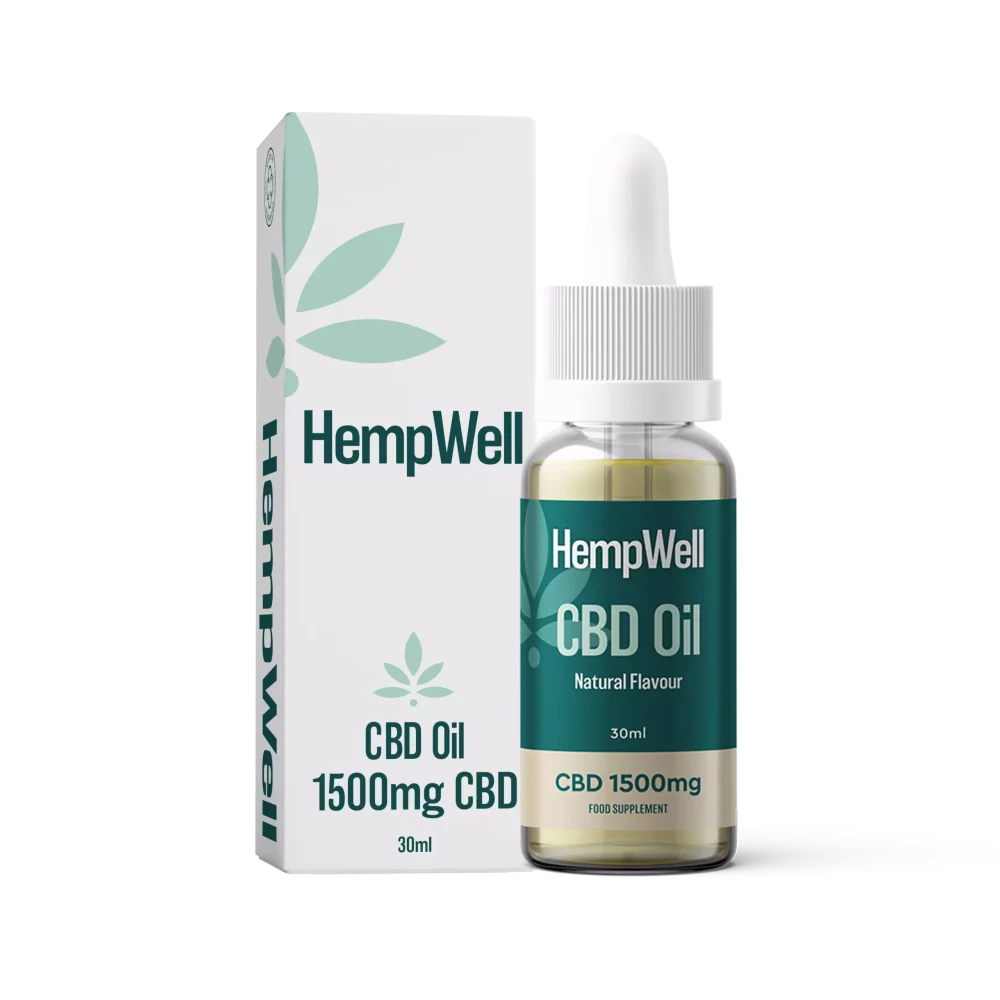
Yes, you can drive on CBD in Ireland, provided the product contains no THC. CBD is not a controlled drug and is not on the list of substances the drug-driving law measures; THC is. Ireland’s Road Traffic Act 2016 makes it an offence to drive with THC at or above 1 nanogram per millilitre of blood, one of the strictest limits in Europe, and Garda roadside tests look for exactly that. A THC-free CBD oil has nothing in it to find. A “full-spectrum” product with “a little” THC, which is not legal to sell here anyway, is the one that can put you over.
This guide covers what the law actually says, how Garda roadside drug testing works and what it detects, what the driving trials found when people took CBD and got behind the wheel, the one real caveat (drowsiness when you first start), and what to do if you are stopped. We make our CBD oils THC-free at our laboratory in York Science Park and publish the lab report for each product, so the practical advice here is what we tell our own customers.
Table of Contents
- Can you drive on CBD in Ireland? The short answer
- What the Road Traffic Act 2016 says
- Garda roadside drug tests: what they detect
- What the driving trials found
- The real caveat: drowsiness, especially at first
- Which CBD products are safe to drive on
- If you are stopped by the Gardaí
- How we do it at HempWell
- Frequently asked questions
Can you drive on CBD in Ireland? The short answer
Three facts settle it. CBD is not a controlled drug in Ireland and is not one of the drugs the Road Traffic Act measures. THC is, with a blood limit so low that any THC in a product is a risk. And in controlled trials, people who took CBD and then drove showed no measurable impairment. So the question is never “did you take CBD”, it is “did your CBD contain THC”. For a legal Irish CBD product the answer should be no, and the lab report should show it. Our guide to whether CBD is legal in Ireland explains why THC-free is the only standard that works here.
What the Road Traffic Act 2016 says
Ireland has two separate drug-driving offences. The older one is driving while impaired by any intoxicant, including prescribed medicines, to the point of not having proper control of the vehicle. The newer one, introduced by the Road Traffic Act 2016, is a per-se offence like the drink-drive limit: it is an offence to drive with a specified drug in your blood at or above a specified concentration, regardless of whether you feel or look impaired (Road Traffic Act 2016, section 8). The limits in the Act’s schedule are:
| Specified drug | Blood limit |
|---|---|
| Delta-9-THC (cannabis) | 1 ng/ml |
| THC-COOH (the cannabis breakdown product) | 5 ng/ml |
| Cocaine | 10 ng/ml |
| Benzoylecgonine (cocaine breakdown product) | 50 ng/ml |
| 6-acetylmorphine (heroin) | 5 ng/ml |
CBD does not appear in that schedule, and it does not convert into THC inside the body: a 2022 study that dosed healthy adults with pure CBD found “no evidence of CBD conversion to Δ8- or Δ9-THC” (Sholler et al., 2022). The 1 ng/ml THC limit is effectively a zero-tolerance threshold, which matters for anyone tempted by an imported full-spectrum product: a small THC dose can register in blood for hours. Prescribed cannabis-based medicine under the Medical Cannabis Access Programme comes with a medical exemption certificate; over-the-counter CBD does not need one, because it contains no THC.
Garda roadside drug tests: what they detect
Since 12 April 2017, Gardaí have been able to test drivers at the roadside with an oral-fluid device, the Dräger DrugTest 5000, which screens a saliva swab for cannabis (THC), cocaine, opiates and benzodiazepines (An Garda Síochána, April 2017). The roadside test is preliminary, like a breath test: a positive result leads to arrest and an evidential blood sample, analysed by the Medical Bureau of Road Safety against the limits above.
None of the four panels tests for CBD. In the Johns Hopkins urine study, after pure CBD “only 1 out of 218 urine specimens screened positive” at the most sensitive cut-off and none confirmed positive; after CBD-dominant cannabis containing 3.7mg of THC, several did (Spindle et al., 2020). Blood tests tell the same story: THC-free CBD gives the laboratory nothing to measure. Our guide to CBD and workplace drug tests in Ireland covers the employment side, which uses the same chemistry.
What the driving trials found
- On a real motorway. In a randomised trial published in JAMA, 26 adults drove 100km on a public road after vaporising THC-dominant cannabis, CBD-dominant cannabis, a mix, or placebo. THC increased lane weaving for the first couple of hours, by an amount comparable to a blood alcohol level just over the Irish limit for experienced drivers; CBD did not: “there were no significant differences between CBD-dominant cannabis and placebo” (Arkell et al., JAMA, 2020).
- At very high oral doses. A dose-ranging trial gave healthy adults 15mg, 300mg or 1,500mg of CBD by mouth, then tested them in a driving simulator and on cognitive tasks. The authors concluded that “acute, oral CBD treatment does not appear to induce feelings of intoxication and is unlikely to impair cognitive function or driving performance” (McCartney et al., 2022). The 1,500mg dose is more than twenty times the daily amount the Food Safety Authority of Ireland’s guidance suggests healthy adults stay under.
- Everyday amounts. With 100mg of CBD by mouth or inhaled, “cognitive/psychomotor impairment was not observed in any drug condition” and oral CBD was indistinguishable from placebo on how people felt (Spindle et al., 2020).
The JAMA authors added a fair caveat: a trial of 26 people cannot rule out small effects. Read the evidence as “no sign of impairment at any dose tested”, not as a guarantee for every person on every day, which is where the next section comes in.
The real caveat: drowsiness, especially at first
Somnolence, or sleepiness, is one of the more consistent side effects in CBD trials, mostly at higher amounts and when people first start (Taylor et al., 2018). It is not intoxication, and it is not what the roadside test looks for, but Ireland’s impairment offence applies to any substance that leaves you without proper control of the car, and driving tired is dangerous on its own terms. So the sensible rules are the ones that apply to any new supplement or medicine:
- Take your first few doses at home, in the evening, and see how you respond before you drive on it.
- Keep the amount modest and consistent; the drowsiness signal is dose-related.
- Do not combine CBD with alcohol or sedating medicines before driving.
- If a dose makes you drowsy, do not drive until it has passed, and lower the amount next time. Our guide to CBD oil side effects covers what else to expect.
Which CBD products are safe to drive on
| Product type | Drive on it? | Why |
|---|---|---|
| CBD isolate oil, capsules, gummies | Yes | CBD and nothing else from the plant; THC not detected on the lab report |
| Broad-spectrum oil (THC removed) | Yes | Other cannabinoids kept, THC removed; check the report says not detected |
| CBD creams, balms, patches | Yes | Very little CBD reaches the bloodstream from the skin and there is no THC |
| THC-free CBD vape | Yes, with the drowsiness caveat | Faster onset; in trials people noticed the effect but showed no impairment |
| “Full-spectrum” oil with trace THC | No | Not legal to sell in Ireland; THC can exceed 1 ng/ml in blood for hours |
| “CBD flower”, HHC, cannabis edibles | No | Controlled drugs; THC or an intoxicating cannabinoid by design |
The lab report is the deciding document. Ours are on our lab reports page by batch, and the THC line should read “not detected” or “<LOQ” (below the limit of quantification).
If you are stopped by the Gardaí
A roadside oral-fluid test takes a few minutes. If you take THC-free CBD, you can expect it to come back negative for cannabis, and you have no obligation to mention a food supplement any more than a vitamin. If you carry CBD with you, keep it in its original packaging with the batch number visible; a photo of the lab report on your phone is a sensible extra. If a test did come back positive, the evidential blood test at the station is the one that counts, and THC-free CBD gives it nothing to measure. The case to worry about is a product bought abroad or from a shop that could not show you a report; that is the one that may contain THC, and the law does not care that it was labelled “CBD”.
How we do it at HempWell
- THC-free as a matter of policy. Our Pure range is CBD isolate in organic MCT oil; our Broad Spectrum range has the THC removed. Every product is independently lab tested and the certificate, including the THC line, is on our lab reports page.
- Made and traced by us. Hemp from our own EU farm, extracted and bottled at our laboratory in York Science Park, dispatched in Ireland by DPD.
- Honest about effects. CBD is a food supplement, not a treatment, and we tell new customers to start at home and start low. Our health content is written with Professor Mike Barnes, a consultant neurologist, as our scientific adviser.
Starting out? Our CBD dosage guide explains how to begin, and our Pure CBD Oil range is the simplest THC-free place to start.
Frequently asked questions
Is it illegal to drive on CBD oil in Ireland?
No. CBD is not a controlled drug and is not one of the drugs the Road Traffic Act measures. The offence is driving with THC at or above 1 ng/ml of blood, or driving while impaired by any substance. A THC-free CBD oil breaks neither rule.
Will CBD show up on a Garda roadside drug test?
No. The roadside device screens saliva for THC, cocaine, opiates and benzodiazepines, not CBD. Pure CBD does not produce THC in the body, so a THC-free product gives a negative cannabis result.
How long after taking CBD can I drive?
If you know how it affects you and it does not make you drowsy, there is no waiting time; the trials found no impairment even at 1,500mg. When you first start, take it at home in the evening and leave driving until you know your response.
Can I drive on CBD gummies or a CBD vape?
Yes, if they are THC-free. A vape acts faster and you may notice the effect, so apply the drowsiness rule; gummies and capsules act slowly and gently.
What is the THC driving limit in Ireland?
1 ng/ml of blood for THC itself and 5 ng/ml for its breakdown product THC-COOH, under the Road Traffic Act 2016. It is one of the lowest limits in Europe, which is why “a little THC” is not a safe margin.
What if I use prescribed medical cannabis?
Products prescribed under the Medical Cannabis Access Programme contain THC and come with a medical exemption certificate for the per-se limit, but the impairment offence still applies. That is a conversation for your consultant, not a CBD seller.